
Whole-house repipe
Choosing a whole-house repipe means every supply pipe is replaced, entry point to fixtures, and the finished system is all new material.
Repiping is the replacement of supply pipes inside the building. Replacing a water service line is a separate job on the pipe that connects the building to the main. We arrange both.
After a plumber studies what is already in the walls, the discussion covers whether a full repipe, a single section or a new service line suits the trouble.
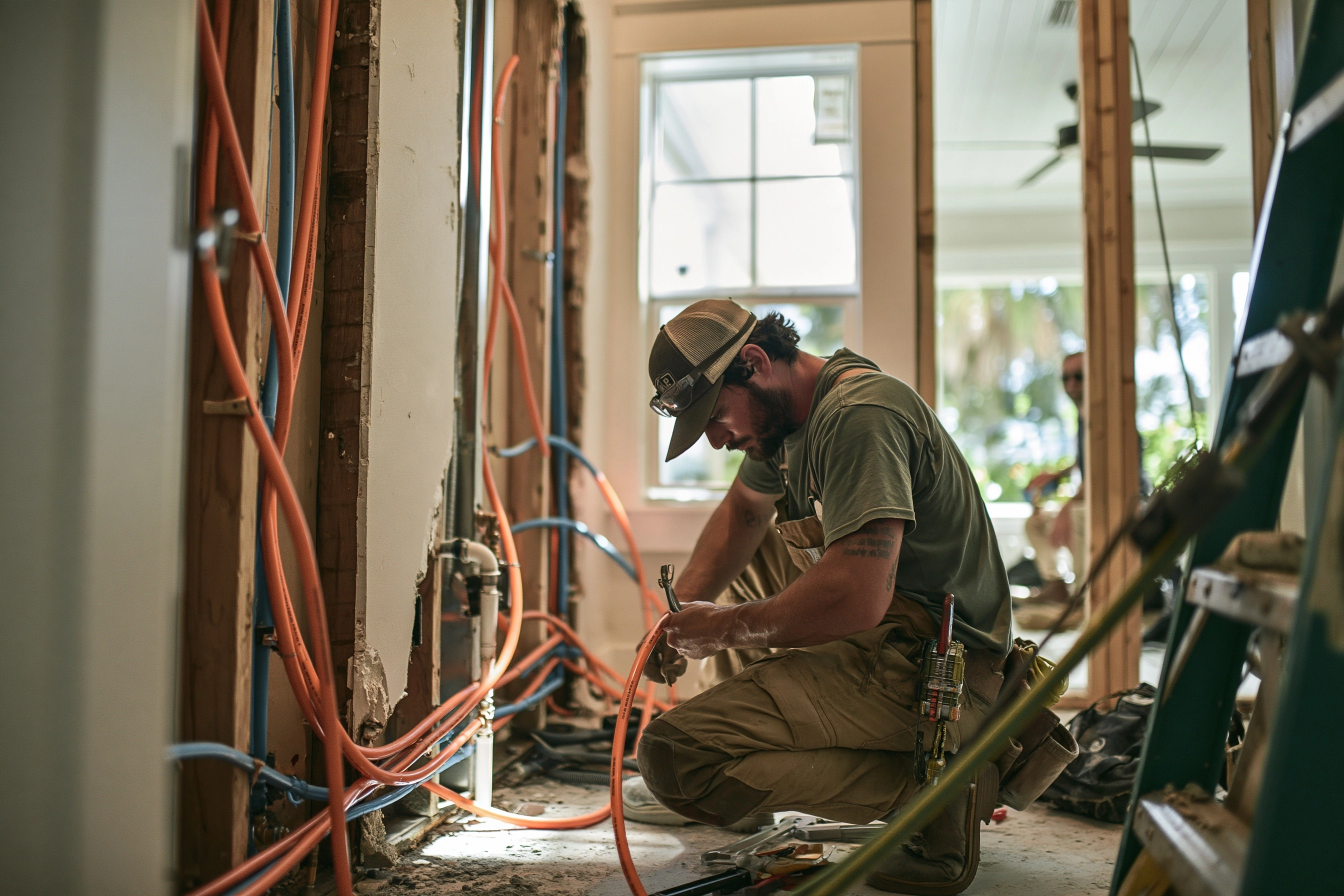
Choosing a whole-house repipe means every supply pipe is replaced, entry point to fixtures, and the finished system is all new material.
Trouble in one run, say the kitchen supply or a single bathroom branch, can be fixed by replacing just that run while the other pipes keep working.
The service line brings water in from the main. A new one goes in when the old line has leaked or sits on the city’s list of lead lines.
Supply runs can be done in PEX, a flexible plastic tubing, or in copper, a rigid metal. The plumber walks through the choice for your building and plans the routing.
The Lead Free JC program has known lead service lines replaced by a licensed plumber and sets 2031 as the date for all of them. The program’s address map is the first place to look for your own line.
Swapping existing pipe for new approved material of like capacity is minor work, with a permit and a start after notice. Anything bigger or rearranged needs a full permit.
No. Under New Jersey law, replacing any part of a service line without replacing the entire line is a partial replacement, and a partial replacement does not count as replacement.
Where a leak has not been located, leak detection comes before any pipe is replaced, and the water heater page covers a heater that connects to the new runs. The home page covers the rest.
Call us to discuss your current issue and how we can assist you. The call is free and you get a free, personalized estimate with no obligation. We're here to help.
Call (855) 321-3426